
Seongnam Dental Clinic
Without dentures, like my own teeth
Full arch implantWhat is it?
Dr. Park Hyun-sung · Dr. Park Hyun-jun's Full Arch Implant Guide
Full arch implants
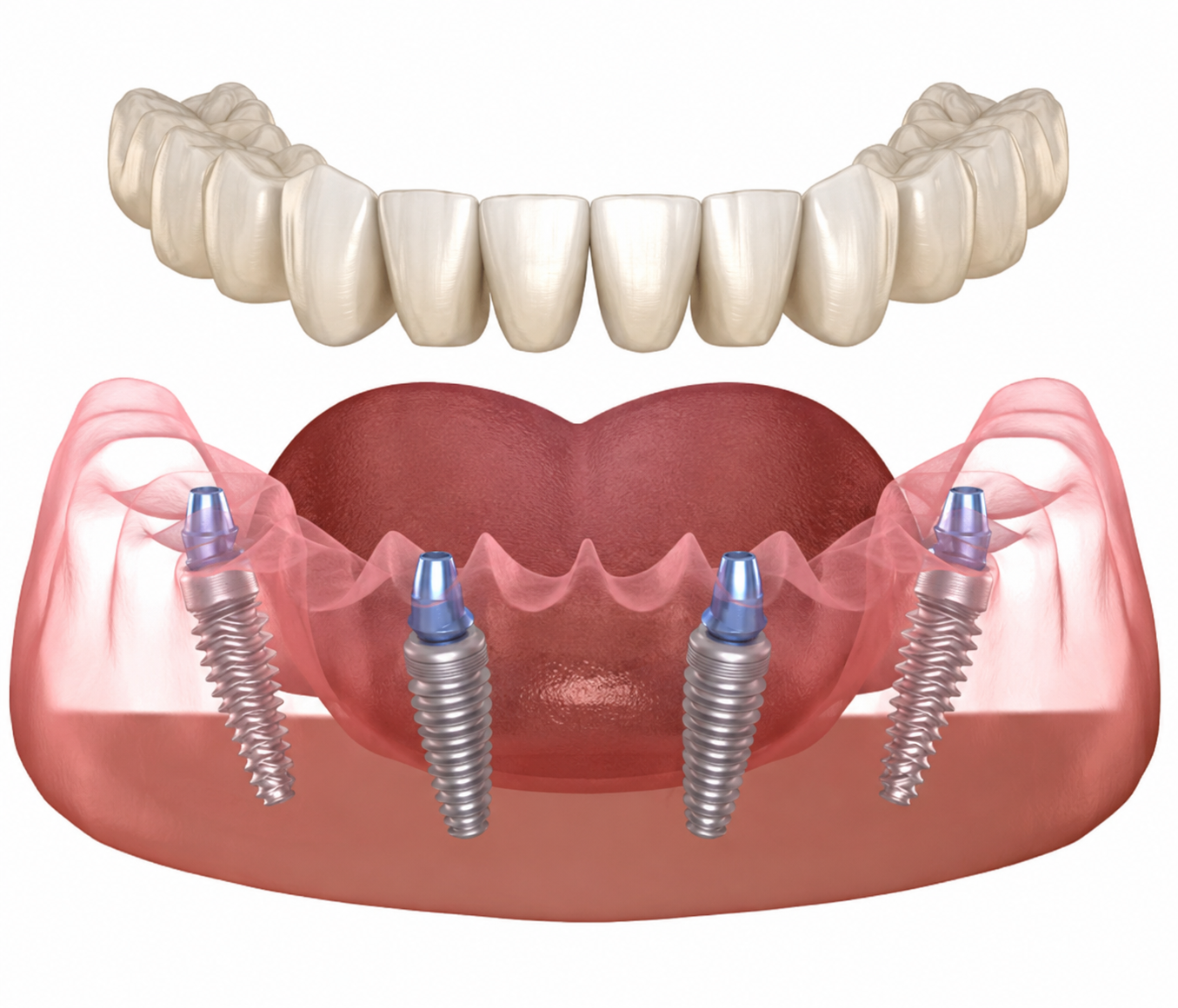
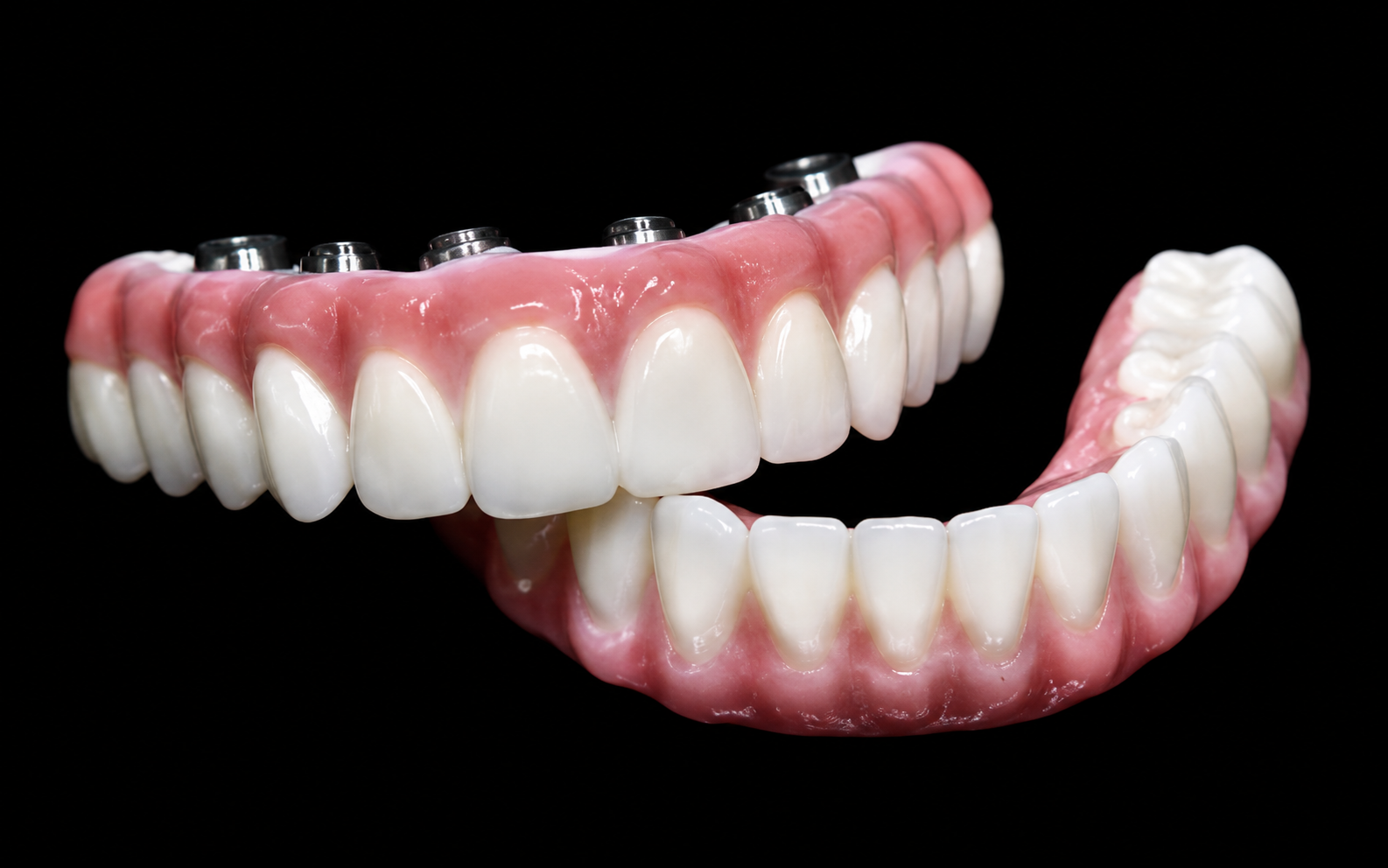
This is a fixed prosthodontic treatment that supports all upper or lower teeth with a minimum of 4-6 implant fixtures. Unlike dentures, it does not require removal, and chewing force and aesthetics are close to natural teeth.
Fixed prosthesis
Since the fixture is firmly fused to the bone, the prosthesis is stable, with no detachment or loosening. Oral hygiene management can be performed in the same way as with conventional implants.
Same-day temporary prosthesis
With the All-on-4 method, temporary prosthetics can be fitted on the same day of implant placement, allowing you to maintain aesthetics and function even during treatment. The total treatment period is typically 4 to 6 months.
Why choose a full arch implant
For cases of edentulism (complete tooth loss) or multiple missing teeth, conventional dentures have fundamental limitations, including reduced chewing power, a feeling of foreignness, and accelerated gum recession. Full arch implants support a prosthesis for an entire dental arch with 4 to 6 fixtures, allowing for the restoration of a full set of teeth as a fixed prosthesis even with a small number of implants. Because the load is directly transmitted to the bone, the rate of bone loss is significantly slowed, and the ability to regain chewing function, pronunciation, and aesthetics comparable to natural teeth is critically different from dentures.
Full Arch Dental Implants: Systemic Health Conditions to Check Before Procedure
The success of a full arch implant is as much about surgical skill as it is about The patient's overall health statusIt is greatly influenced by this. The first thing to check is whether blood sugar is controlled. If you have diabetes, the rate of bone fusion failure increases if the HbA1c level is above a certain range, so internal medicine control must precede surgery. OsteoporosisThis lowers bone density, affecting the initial fixation strength of the fixture. The risk of jaw necrosis is particularly high if you are taking bisphosphonate medications, so it is essential to share your medication history with your doctor. Smoking impairs blood flow, significantly increasing the failure rate of bone fusion, so quitting smoking for at least two weeks before and after surgery is recommended. If you are taking blood-clotting-related medications (anticoagulants/antiplatelets), you must coordinate the surgery schedule and whether to stop taking the medication in advance. These systemic health conditions not only determine the possibility of surgery Detailed adjustment of treatment planIt is for this reason that, even if you have health problems, it is important to first consult and confirm individual suitability.
Is it possible to get full arch implants even with insufficient bone?
Even if bone grafting is deemed necessary, it can often be performed simultaneously with full-arch implant placement, minimizing the number of treatments and the overall treatment duration. Various materials are used for bone grafting, including autografts, allografts, xenografts, and synthetic grafts, with the type and amount of material determined individually based on the resorption rate and the implant site. Following bone grafting, a healing period is required for new bone formation, during which the bone formation status is monitored in stages using a cone beam CT. The decision on whether and to what extent bone grafting is needed is based on prior 3D analysis results, so it is important to establish a treatment plan after a precise diagnosis rather than making arbitrary judgments before visiting the clinic.
Method Comparison
Comprehensive Restorative Treatment Options in Seongnam Dental Clinics: A Quick Comparison
Dentures, individual implants, and full arch implants have different indications and long-term prognoses, so the optimal method varies depending on the patient's condition.
| Distinguish | Complete denture | Individual implant | Full arch implant |
|---|---|---|---|
| Fixing method | Gingival adsorption | Unit crown retainer | Fixed fixture |
| Copyright | Natural Teeth 20–25% | Similar to natural teeth | Similar to natural teeth |
| Bone resorption inhibitor | No inhibitory effect | Excellent | Excellent |
| Removable or not | Needs to be put on and taken off daily | Unnecessary | Unnecessary |
| Number of fixtures required | Unnecessary | The number of missing teeth | 4-6 bows |
| Treatment duration | short-term | Long-term (in case of multiple deficits) | 4-6 months |
| Same-day temporary prosthesis | Not applicable | Depends on the case | All-on-4 possible |
| Main application | Immediate repair required | Partial defect | Complete or multiple tooth loss |
Who needs it?
Seongnam Dental Full Arch Implants, Recommended For These People
If you meet the following conditions, you can receive more stable and functional treatment through a full-arch implant.
Individuals with complete tooth loss or very few remaining teeth
Full-arch implants are suitable when all teeth in the maxilla or mandible are lost, or when numerous teeth require extraction due to a poor prognosis. The procedure can involve extracting all remaining teeth and simultaneously placing fixtures.
For those whose dentures are uncomfortable or don't fit well
Full-arch implants can restore fixed prosthetics when daily meals are difficult due to the foreign body sensation, pain, or looseness of dentures, or when dentures no longer fit due to gum recession.
For those seeking more efficient treatment than individual implants
When multiple teeth are missing, placing an implant for each tooth is a significant burden in terms of the number of surgeries, duration, and cost. The full-arch method, which supports the entire jaw with 4-6 fixtures, is more efficient overall.
For those who want treatment without bone grafting
The All-on-4 method utilizes an angled implant placement technique to maximize the use of existing bone, allowing for a wider range of cases to be treated without bone grafting. Suitability is determined after precise analysis with a CBCT scan.
Procedure Flow
Seongnam Dental Full Arch Implant Procedure
From precise diagnosis to final prosthesis, we proceed systematically, step by step.
Precise diagnosis and treatment plan establishment
We perform 3D analysis of jawbone volume, quality, and anatomical structures using a CBCT scan. Prognosis of remaining teeth, occlusal analysis, and overall health status are comprehensively evaluated to determine the optimal method, such as All-on-4 or All-on-6.
Extraction of residual teeth and placement of fixtures
We extract non-prognostic teeth and precisely place implant fixtures simultaneously. In the case of All-on-4, we place the posterior fixtures at an angle to ensure sufficient stability without bone grafting.
Same-day temporary prosthesis placement
Once the initial fixation of the fixture is secured, the temporary prosthesis is placed on the same day. During the temporary prosthesis period, soft meals are recommended, which helps maintain aesthetics and function while osseointegration progresses.
Bone fusion confirmation and final prosthesis impression
Following implant placement, a 3-6 month osseointegration period is observed to confirm the bond between the fixture and bone. Once stable integration is confirmed, a precise impression is taken for the fabrication of the final prosthesis.
Final prosthesis placement and occlusion adjustment
The final prosthesis, made from materials such as zirconia or acrylic resin, is fitted and the occlusion is precisely adjusted. Regular follow-up visits will then be scheduled to continuously manage screw tightening and oral hygiene.
Key to Success
Seongnam Dental Full Arch Implant,
Conditions for Long-Term Success
precise treatment plan and
Thorough oral hygiene is key.
The long-term prognosis of full-arch implants is largely dependent on the success of initial osseointegration and the level of maintenance thereafter. Conditions such as diabetes, osteoporosis, and smoking can affect the success rate of osseointegration, so thorough consultation and management of risk factors should precede the procedure.
After the final prosthesis is fitted, use an implant-specific toothbrush and interdental cleaning tools to maintain cleanliness under the prosthesis. Regular visits are necessary to continuously check for screw loosening and the condition of the surrounding bone.
Smoking Cessation Management
Smoking significantly increases the rate of bone fusion failure. Quitting smoking for at least two weeks before and after surgery is recommended.
Blood sugar control
For diabetic patients, undergoing procedures after controlling their HbA1c to a stable range increases the success rate of bone fusion.
Regular maintenance
A semi-annual check-up for screw tightening and oral hygiene is key to long-term success.
Seongnam Full Arch Implant
Q&A You Need to Know
1. How are full arch implants different from dentures?
2. Is a full arch implant possible even if a lot of bone has been lost?
Can I eat on the day of surgery?
4. How long do full-arch implants last?
Seongnam dental clinic: suitability of full arch implants
We will confirm with a precise diagnosis.
Director Park Hyun-sung · Director Park Hyun-jun | 2nd and 3rd floors, Gangwon Building, 1225 Seongnam-daero, Sujeong-gu, Seongnam-si, Gyeonggi-do
The Seoul Dental Clinic