
Orthodontic · Oral Care · Prevention
Seongnam orthodontic clinic, undergoing orthodontic treatment
Tooth decay and gum problems
How do I prevent it?
Director Park Hyun-sung · Director Park Hyun-joon
Complete Guide to Oral Care by Device Type
It creates hard-to-clean spaces.
After getting the appliance attached, there are areas that the toothbrush cannot reach well. Food debris easily gets stuck in those gaps.
Gums are swollen and prone to bleeding.
If bacteria accumulate around the device, the gums become red and swollen, and bleeding often occurs when brushing teeth.
White spots may appear after orthodontic treatment
If teeth around the appliance are exposed to acid for a long time, the surface can gradually dissolve and remain as white spots after orthodontic treatment is completed.
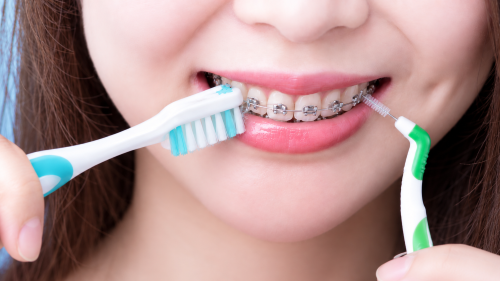
Undergoing braces treatment
Brush your teeth like this
One of the biggest difficulties people looking for an orthodontist in Seongnam experience after starting orthodontic treatment is brushing their teeth. It is difficult to clean around the brackets (the small appliances attached to the teeth) and wires properly with a regular toothbrush. The basic method is to tilt the orthodontic toothbrush at an angle and meticulously clean the top and bottom of the appliances.
Toothbrushes barely reach between teeth or under the wires, so you need to use interdental brushes (small brushes as thin as toothpicks) separately. Using a Waterpik to wash away food particles with water jets makes cleaning much easier and more thorough.

Clear aligners,
Things that are easy to miss as they become more convenient
Clear aligners are convenient because you can take them out when eating, but if you put them back in without brushing your teeth or drink beverages while wearing them, it creates an environment where cavities are actually more likely to develop. This is because sugars become trapped directly against the inside of the aligners.
It is essential to brush your teeth after meals before putting your appliance back in. You must also wash the appliance daily with warm water and a soft toothbrush to prevent bacterial growth.

While getting braces, these foods
Avoid it if possible
Sticky foods like caramel, jelly, and rice cakes stick to the appliances and do not come off easily. Hard foods like ice, candy, and nuts cause brackets to fall off. Carbonated drinks and sour fruit juices weaken the tooth surface, making them prone to cavities.
Eating easy-to-chew foods such as tofu, eggs, fish, and softly cooked vegetables makes appliance care easier and is also good for oral health. Simply drinking water frequently helps reduce the activity of bacteria in the mouth.
Device Comparison
By device type
Oral Care Points Comparison
Depending on the type of orthodontic appliance, the care method varies.
| Item | Metal and ceramic brackets | Clippy-C (self-ligating) | Clear Invisalign |
|---|---|---|---|
| Toothbrush access difficulty | Difficulty | Usually | Easy |
| interdental brush requirement degree | Essential | Essential | Recommended |
| Main dental caries risk factors | Food debris around brackets | Food debris around brackets | Wear appliances without brushing teeth |
| Use of fluoride | Highly recommended | Highly recommended | Recommended |
| Recommended scaling frequency | Every three months | every 3-4 months | Every 4 to 6 months |
Warning Signs
Undergoing orthodontic treatment
If these symptoms appear
The earlier it is identified, the smaller the treatment area can be.
🩸 If you bleed when brushing your teeth
This is a sign that inflammation is starting in your gums. Do not brush too hard, and use an interdental brush to clean around the appliances more thoroughly. If it continues, please be sure to tell us at your next visit.
❄️ If cold or sweet things make your teeth sensitive
This could be an early sign that your tooth surface is weakening. Be sure to use fluoride toothpaste and reduce your intake of carbonated or acidic beverages. Having fluoride applied directly at the dentist can also be helpful.
If white spots have formed around the device
The surface of the teeth has started to dissolve little by little. White spots may remain in those areas even after orthodontic treatment is finished. The sooner it is discovered, the more it can be prevented with fluoride treatment alone.
💧 If your bad breath has gotten worse
The cause may be an increase in bacteria between the devices. Try cleaning more thoroughly with interdental brushes and a Waterpik, and add mouthwash before bed. It is also a good idea to get scaling at your next visit.
Daily Routine
Undergoing orthodontic treatment
Daily oral care routine
A 5-step habit practiced after every meal maintains the orthodontic results.
Rinsing with water immediately after eating
First, rinse your mouth with water to remove food particles. If you've had a carbonated drink or something acidic, it's best to wait 30 minutes before brushing your teeth.
Brush around the orthodontic appliance with an orthodontic toothbrush.
Tilt the orthodontic toothbrush at an angle and thoroughly brush the top and bottom of the brackets. It is recommended to focus on brushing each tooth for at least 10 seconds.
Cleaning between teeth with an interdental brush
Toothbrushes cannot reach the space under the wire or between the teeth. Please clean those areas separately using an interdental brush (a thin, small brush). Using a Waterpik as well is more effective.
Finish with fluoride toothpaste
Using fluoride toothpaste (1,000 ppm or more) can help keep your tooth surface harder. Rinsing your mouth too much with water after brushing reduces the effectiveness of the fluoride, so rinse only once.
Fluoride mouthwash before bed
Doing one more fluoride mouthwash before bed helps reduce bacterial activity while you sleep. It is best not to drink water immediately after gargling.
Key to Success
Good oral hygiene must be maintained
The correction results are also completed.
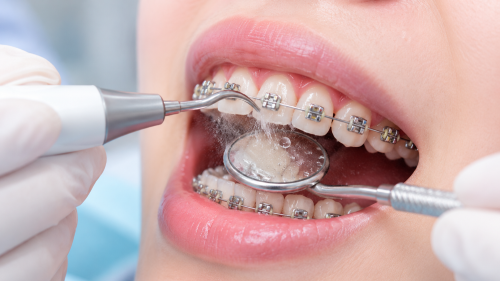
Only after braces were finished
So as not to have regrets
The process must also be healthy.
If you do not brush your teeth properly during orthodontic treatment, cavities, gum problems, or white spots on the tooth surface may remain after the braces are removed. Even if your teeth are aligned nicely, the meaning of orthodontics is halved if the teeth themselves are not healthy.
At The Seoul Dental Clinic, a Seongnam orthodontics dental clinic, oral hygiene status is also checked during orthodontic adjustment visits. The earlier small issues are discovered, the more it prevents them from turning into major problems, and the common trait among people who maintain their orthodontic results well for a long time is precisely this process management.
Regular scaling
During orthodontic treatment, scaling is performed every 3 to 4 months to remove tartar accumulated around the braces.
topical fluoride application
If signs of weakened tooth surfaces appear, a dentist can apply fluoride directly to strengthen them.
Early detection of cavities
During your orthodontic visits, we also check the condition of your teeth to catch cavities early.
Oral hygiene during orthodontic treatment at a Seongnam orthodontic dental clinic
Q&A You Need to Know
1. Are cavities more likely to develop during orthodontic treatment?
2. How many times a day is it appropriate to brush your teeth during orthodontic treatment?
3. Do transparent aligners also pose a risk of tooth decay?
4. Why do gums swell during orthodontic treatment?
5. How often should I get regular check-ups during the orthodontic treatment period?
Seongnam orthodontic dental clinic The Seoul Dental Clinic
Oral health during orthodontic treatment,
Managed together
Director Park Hyun-sung · Director Park Hyun-jun
The Seoul Dental Clinic Link