
Seongnam Dental Clinic
Post-implant care,
After plantingWhy is the value more important?
Director Park Hyun-sung · Director Park Hyun-joon
Aftercare for implants
Preventing inflammation around the eye
Implant placement itself does not cause tooth decay, but inflammation can develop in the surrounding gums and bone. Daily care prevents the onset of inflammation.
Initial changes confirmed
Inflammation around the implant often progresses without pain. Regular checkups are a way to identify changes that are not readily noticeable at first.
Check the condition of the prosthetic devices
Over time, the screws that hold the prosthetic device can become loose or the balance of chewing force may change, requiring periodic inspection.

Even though no tooth decay has occurred, why do I need to take care of the implant?
Dental implants do not cause tooth decay with artificial teeth. However, the gums and jawbone surrounding the implants are living tissues, so if oral hygiene is inadequate and plaque builds up in the mouth, inflammation can occur in the tissues surrounding the implants.
The stage in which inflammation is confined to the gums is called periimplantitis, while the stage in which inflammation spreads to the bone is called periimplantitis. While inflammation often improves with early management, periimplantitis can be more complex to treat. Additionally, inflammation around the implants can occur without pain, so it is difficult to conclude that it is harmless just because it is not painful.
To put it simply, an implant is a pillar planted in the ground, and the gums and jawbone are the soil that holds that pillar in place. No matter how strong the pillar is, if the ground collapses, it will be difficult to support it for a long time. The key to implant care is to keep the surrounding gums and bone healthy, rather than the implant itself.
Factors that increase the risk of inflammation include poor oral hygiene due to insufficient toothbrushing, smoking, a history of gum disease, and diabetes where blood sugar control is not well-maintained. Of these, oral hygiene and smoking are areas that can be changed by the individual, making them the most important aspects to take care of in the post-care phase.

For the first few days after the surgery, please stay like this.
Immediately after the implant surgery, your gums are in a state of minor injury. During this time, you should not touch the surgical site with your tongue or fingers, and avoid spitting out a lot of saliva or using a straw. On the day of the surgery, you should avoid strenuous exercise, drinking alcohol, and hot saunas. To reduce bleeding and swelling, apply cold compresses for a day or two.
Smoking is known to slow wound healing and increase the risk of inflammation around implants, so it should be avoided as much as possible. Take the prescribed medication as directed and follow the specific instructions depending on the surgical procedure and your individual condition; therefore, please prioritize the instructions received from your dentist.
It is common to avoid too hot or spicy foods and hard foods on the day of the surgery, and to eat mostly soft foods. If possible, chew on the opposite side of the surgical site.
After the surgery, you may experience swelling, some bleeding, and bruising. The swelling is usually most noticeable within two to three days after the surgery, and it gradually subsides. However, if the bleeding continues, the swelling becomes more severe over time, you experience fever, or the pain persists despite treatment with prescribed medication, do not hesitate to contact your dentist immediately.
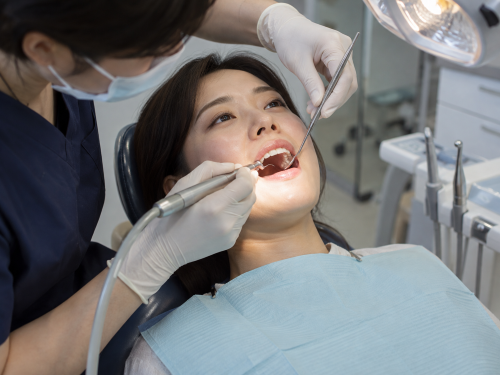
After the implant is completed, regular checkups are required.
During routine checkups, we look at the swelling and bleeding of the gums, the condition of the bone surrounding the implant (as confirmed by X-rays), the alignment of the upper and lower teeth, and the condition of the prosthetic work and screws. The plaque and biofilm on areas that are difficult to clean at home are treated with specialized instruments that do not scratch the surface of the implant.
The interval between check-ups depends on an individual's oral health. It is usually advised to schedule a check-up about six months in advance, and those who have had gum disease or are prone to inflammation may have the interval adjusted shorter.
During the check-up, a test to measure the depth of the gum pockets and a check for any bleeding are also performed. Finding changes before the gums become swollen or painful is the main purpose of regular check-ups. Although you can care for your gums at home with diligence, there are some areas that are difficult to clean alone, so the check-up and professional care are not meant to replace but rather complement the care at home.
Comparison
Seongnam Dental Clinic
Natural teeth and implants
Management comparison
Compare the natural teeth and implants in terms of similarities and differences in terms of care.
| Comparison item | Natural teeth | Implant |
|---|---|---|
| Cavities | May occur | It does not cause damage to the prosthetic material |
| Inflammation around the gums and bones | Possible periodontal disease | Possible peri-implantitis |
| Brushing and flossing daily | Need | Need |
| Periodic checkups | Need | Need |
| Effects of smoking | Increased risk of gum disease | Increased risk of inflammation around the eye |
| Dental scaling instrument | General scalar | Special devices to reduce implant damage |
Who Needs Extra Care?
Seongnam Dental Clinic
For people like this, there is after-life management.
Please pay more attention to it.
If you fall into any of the categories below, we recommend that you seek guidance from your dentist on the appropriate management methods for your situation.
🩹 Someone who has just undergone an implant surgery
During the healing period when the surgical site has healed and the bone has firmly attached itself, it is important to follow the instructions given by the doctor and to visit the scheduled follow-up appointment without fail.
🦷 People who have ever suffered from gum disease (periodontitis)
It is known that people with a history of gum disease are at a relatively higher risk of inflammation around the implants. There are cases where the interval between checkups is shortened.
🚬 People who smoke
Smoking affects the blood circulation and recovery of the gums, making it a known risk factor for inflammation around implants. Quitting smoking is the best help.
😬 Those who have a habit of grinding their teeth or grinding their teeth
Excessive force over time can cause wear on the prosthetic device or screws. If necessary, the dentist will instruct you on the use of protective devices.
Aftercare Flow
Seongnam Dental Clinic
Post-Implant Care
Seasonal trends
We provide guidance based on the specific time period, from the immediate post-surgery period to long-term care.
The day of the surgery and for several days afterward: managing bleeding and swelling
As instructed, soak the gauze in water, apply pressure to the bleeding area, and be careful not to stimulate the surgical site. Take the prescribed medication and avoid drinking alcohol, smoking, and strenuous exercise.
Check-up visit
Check to see if the gums have healed properly. Depending on the surgical procedure, we will also perform the removal of sutures at this time. If bleeding does not stop, if you experience fever, or if the pain becomes increasingly severe, please contact us without waiting for the scheduled appointment.
Management of the period of integration of bone and connective tissue
It usually takes several months for the implanted implant to bond firmly to the jawbone, and the duration varies depending on the area and the bone condition. During this time, you should continue with oral hygiene and visit the clinic at the scheduled time.
Check after fitting the prosthetic device
After the prosthetic restorations are placed, we check that the upper and lower teeth are aligned, and are instructed on how to clean around the implants and how to use the oral care products that will be used.
Periodic checkups and long-term management
Regularly check the condition of the gums, the bone, and the prosthetic materials and screws, and have a scaling treatment with a specialized instrument. Daily care at home combined with regular checkups will help maintain the health of the implants.
Daily Care
Seongnam Dental Clinic
Doing it at home
Key to implant management

What is as important as a dental checkup
Oral care every day.
The bacterial membrane in the mouth builds up again over time even after brushing. Therefore, the habit of gently brushing the border area where implants and gums meet every day is the most basic practice. Brushing alone is not enough to clean between the teeth and under the implants, so many people use interdental brushes or dental floss together.
The size and shape of the tools used depend on the location of the implant and the shape of your gums. We recommend that you ask your dentist for guidance on the tools and how to use them that are best suited for your oral anatomy.
Gently and meticulously
Do not rub too hard on the gum line; use a soft toothbrush to clean it thoroughly.
Cleaning between teeth in parallel
Areas that cannot be reached by the toothbrush should be cared for with a interdental brush or floss, and auxiliary tools should be used according to the instructions provided.
Check your lifestyle habits
If you practice not smoking and have a habit of chewing or grinding your teeth, inform the dentist and receive the necessary guidance.
Warning Signs
Seongnam Dental Clinic
If you see this signal,
Don't delay; check it out now.
Although the symptoms listed below are not necessarily a major problem, only a dentist can determine the exact cause.
🔴 My gums are swollen and red
If the gum around the implant is red and swollen than usual, it may be a sign of inflammation.
🩸 There is blood when I brush my teeth
If bleeding occurs repeatedly even when brushing gently, it is often a sign that a bacterial plaque has accumulated and inflammation has developed in the gums.
👃 My breath smells bad and tastes strange
It may be caused by bacteria or pus around the implant. If it continues even after brushing, it needs to be checked.
😣 It's uncomfortable or painful when I chew it
The problem may be with the prosthetic fitting or with the surrounding tissues, and a checkup is necessary to determine the cause.
🔩 The prosthetic is feeling loose
The screws that hold the prosthetic device may have become loose. If you continue to use them as is, the prosthetic device or the screws could be damaged, so it's best to check them early.
🍽 Food keeps getting stuck
The contact between the prosthetic device and the adjacent teeth or the shape of the gums may have changed. Checking the fitting area can help you find the cause.
If a periodontal infection is confirmed during the examination, treatment methods are determined based on the severity of the inflammation.
The earlier it is discovered, the less the burden of treatment will be.
Post-Implant Care
Q&A
1. The implant doesn't cause tooth decay; why do I need to take care of it?
2. How often should I have regular check-ups?
3. Is brushing alone enough to maintain implants?
4. If I have any symptoms, should I go to the dentist immediately?
5. How should I brush my teeth after the surgery?
6. How should I treat peri-implantitis?
Post-implant care,
Check out the methods that fit your current situation.
If you have any questions about implant care or routine checkups,
Check out the clinic information at The Seoul Dental Clinic.
Director Park Hyun-sung · Director Park Hyun-jun
For medical guidance and consultation →